

Wear it well.
Keep it longer.
Practical answers for garment care, fit and alterations, dress codes, storage and travel—built to help you make the next wardrobe decision with less guesswork.
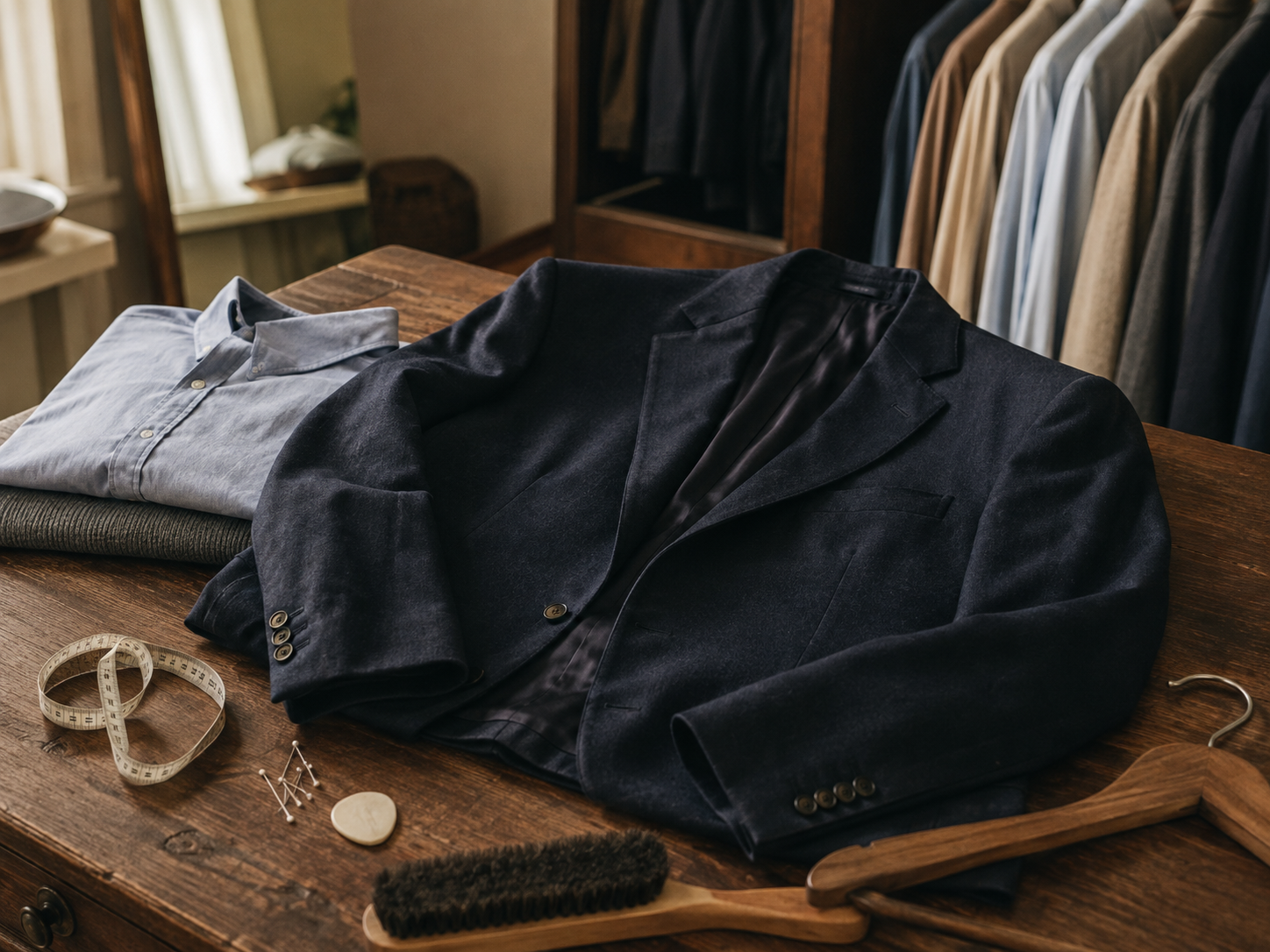
From the first fitting
to the final fold.
A good wardrobe is not only about what you buy. It is knowing what works for the occasion, what fits correctly, what can be altered, and how to care for each piece once it is yours.
Wearfitcare organizes those decisions into clear guides, visual references, decision tools and downloadable checklists.
Browse all practical guidesFour ways to find
the right answer.
Choose the part of your wardrobe decision that is slowing you down. Each path connects guides, tools and downloadable references.
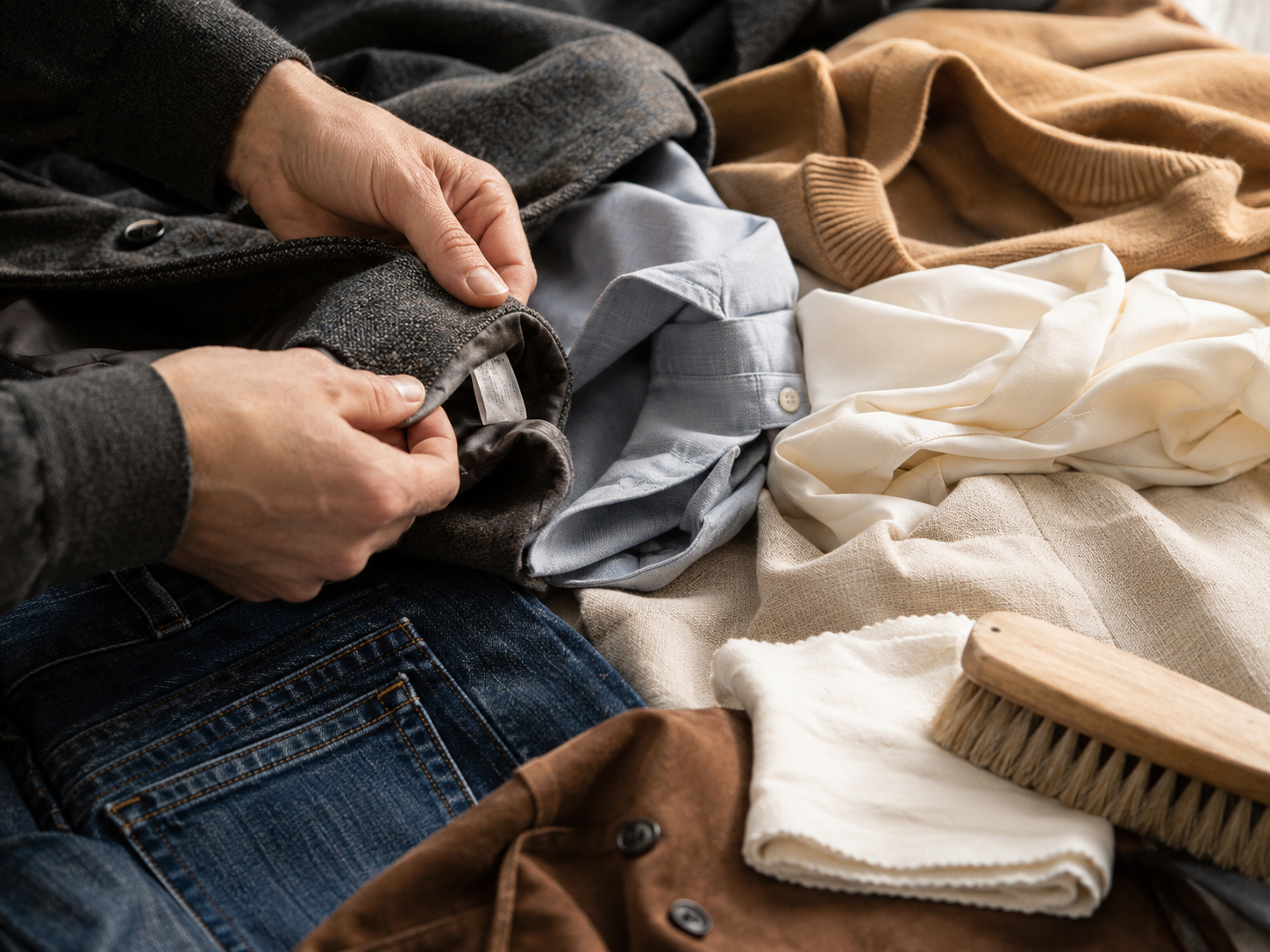
CARE & LONGEVITY
Wash, treat, press and store with care.
Explore care guides →FIT & TAILORING
Diagnose fit before changing the garment.
Explore fit guides →DRESS CODES
Decode the invitation, office or event.
Explore dress codes →TRAVEL & PACKING
Pack structured clothing with fewer creases.
Explore packing guides →Know the fabric before
you treat the problem.
Washing temperature, drying method, stain treatment and heat all depend on fiber and construction. Start with the care label, then use the site to understand the safest general path.
Ink Stain Removal Guide for Clothing
→Viscose and Rayon Care Guide: Washing, Drying and Reshaping
→Why Do Folded Clothes Develop Permanent Creases?
→Decision tools,
not guesswork.
Use interactive helpers for care, stains, fit, alterations and dress-code decisions. Each tool gives you a starting point and the cautions that matter.
Browse every tool →Dress Code Decoder
Use the named dress code as the baseline, then adjust for the event, venue, time of day, weather,…
Open toolTrouser Break Selector
Trouser hems, tapering, and modest waist changes are common alterations. Plaids, cuffs, very narrow hems, side stripes, and…
Open toolAlteration Viability Checker
Start by identifying whether the issue is length, circumference, shoulder/armhole structure, or overall garment balance. Simple length and…
Open toolLeather Care Selector
Identify the material and finish first. Remove dry surface dirt, use only compatible products in small amounts, test…
Open toolShrinkage Rescue Checker
Blot without spreading. Ink chemistry varies, so use only a stain product labeled compatible with the fabric and…
Open toolLaundry Symbol Decoder
Use the garment care label as the first constraint, then choose the gentlest method compatible with the fiber,…
Open toolUnderstand what can change
before the tailor starts.
Some alterations are routine. Others change the balance and construction of the garment. Learn how to identify the actual fit problem and when a purchase is better left on the rack.
Explore fit & alterationsDress codes without
the vague rules.
Start with the level of formality, then factor in the venue, time of day and stated expectations. The goal is not to prescribe personal style—it is to make the dress-code signal easier to interpret.
What Should You Do When an Invitation Has No Dress Code?
→What Is the Difference Between Formal and Black Tie?
→What Is the Difference Between Cocktail and Semi-Formal Attire?
→What Is the Difference Between Business Professional and Business Casual?
→Useful answers for
real wardrobe problems.
GUIDE
What Should You Do When an Invitation Has No Dress Code?
Use the named dress code as the baseline, then adjust for the event, venue, time of day, weather,…
Read guideGUIDE
Ink Stain Removal Guide for Clothing
Blot without spreading. Ink chemistry varies, so use only a stain product labeled compatible with the fabric and…
Read guideGUIDE
Why Does My Jacket Ride Up at the Back?
Start by identifying whether the issue is length, circumference, shoulder/armhole structure, or overall garment balance. Simple length and…
Read guideGUIDE
Viscose and Rayon Care Guide: Washing, Drying and Reshaping
Treat wet viscose gently because it can distort; use the garment label to decide whether hand or machine…
Read guideGUIDE
Why Do Dress Shoes Scuff Inside a Suitcase?
Pack around the garments that are hardest to replace or de-wrinkle: structured jackets, dress shirts/blouses, occasion pieces, and…
Read guideGUIDE
Why Do Folded Clothes Develop Permanent Creases?
Store garments clean and fully dry, support their shape correctly, allow airflow where appropriate, and avoid prolonged heat,…
Read guideReferences made for
the closet, suitcase & tailor.
Save the practical information you need more than once: measurement sheets, fit checklists, care references and packing lists.
Browse downloadsFewer wrong turns.
Better-kept clothes.
Start with a guide when you need context, or go directly to a tool when you need a decision.